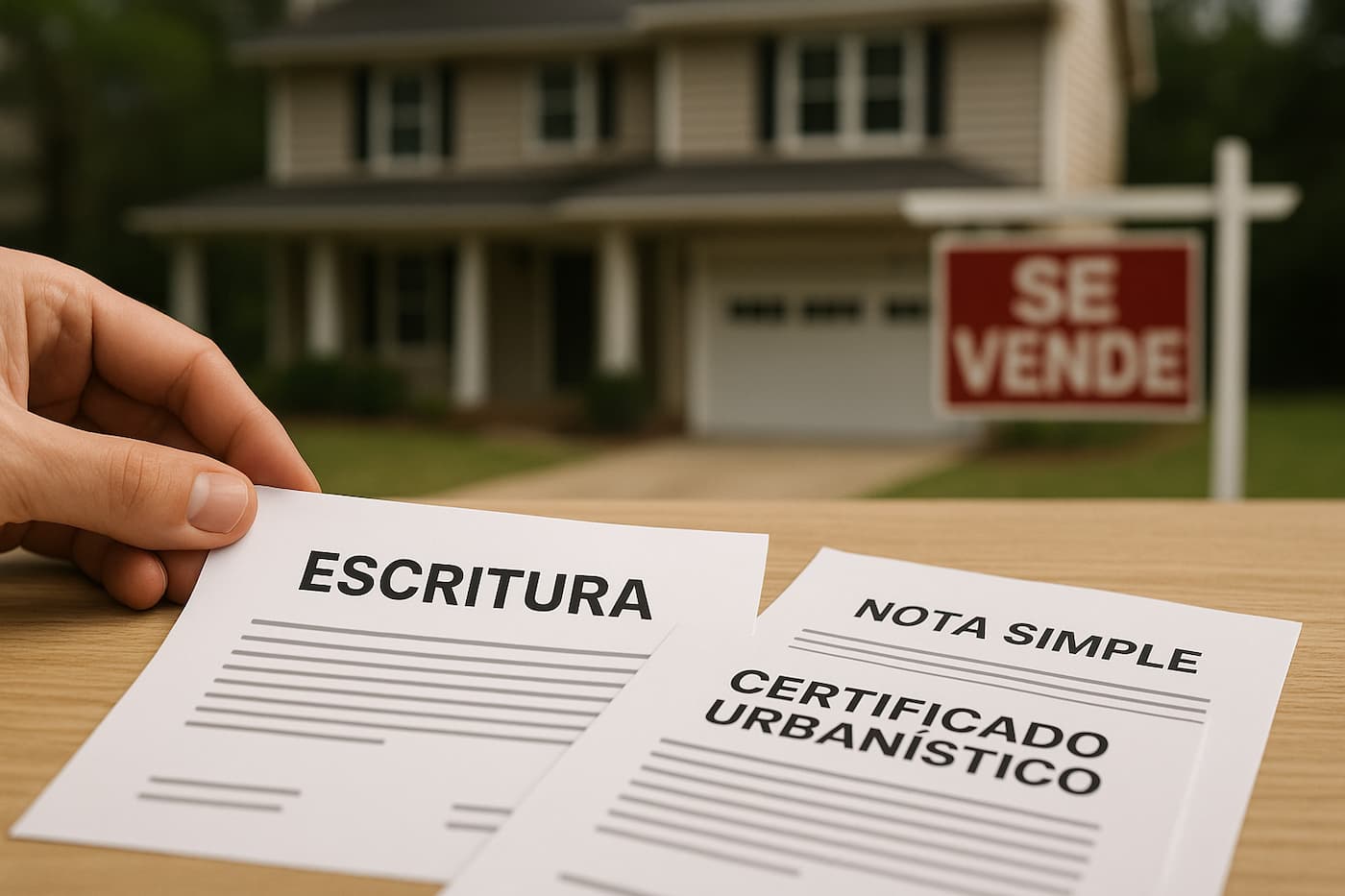
The 3 Documents That Delay the Sale of Your House (and How to Avoid Them)
Has your home found a buyer, but the signing at the notary's office hasn't happened yet?
Many times, the problem isn't the price, the mortgage, or the negotiation.
It's something more mundane: **documentation that isn't ready when needed**.
A sale in Spain can flow in a matter of weeks…
…or get stuck for months due to a simple pending document.
Here are the **3 documents that most delay a sale** (and how to get ahead).
1. The Energy Performance Certificate: The First Legal Filter
It's not optional. It's not decorative.
The **energy performance certificate** has been mandatory since 2013 to sell a home in Spain.
And without it, there's no signing. It's that simple.
The worst part? Many owners remember to request it when they already have a buyer… and that's when the problems begin.
The technician needs to visit the property, take measurements, issue the report, and register it with the regional body. All of this takes **between 2 and 5 business days** if there are no delays. But if it's August, or there are holidays, it can take longer.
Here are 3 steps to get started without stress:
- Find a certifying technician in your city (you can find them on Idealista, habitaclia, or architects' associations).
- Request an appointment as soon as you decide to sell (don't wait for a buyer).
- Keep a PDF copy and a printed copy for the notary.
2. Nota Simple Registral (Property Registry Extract): What the Buyer's Bank Looks At
This document not only shows who the owner is. It also reveals if the property:
- Has a pending mortgage.
- Is embargoed.
- Has urban planning charges.
- Is properly registered in the registry.
In other words: **it's the legal X-ray of your home.**
Everyone requests it: the buyer, the notary, the bank if there's a mortgage. And it must be updated: **less than 3 months old**.
Here's where it all gets complicated:
- Inherited properties that haven't been transferred to the current owner's name.
- Poorly defined or duplicated registry entries.
- Mortgage cancellations that were not registered.
Does this sound like Greek to you? Don't worry. Here's what to do:
- Go to registradores.org and request the digital "nota simple" for about 10€.
- Check that the owner and the cadastral reference match your deed.
- If something doesn't add up, contact your notary or lawyer before continuing to show the property.
3. Certificado de Deuda Cero (Zero Debt Certificate): The Document Nobody Mentions
This document confirms that you are up to date with payments to the homeowners' association.
And **the law requires it to be delivered on the day of signing**. If you don't have it, the sale won't close.
So far, everything seems simple. But getting it isn't always easy.
You depend on other people: the property administrator or the president of the community. And if they're on vacation, sick, or simply don't respond… you'll have to wait.
There can also be unforeseen circumstances: unpaid fees, unregistered special assessments, disagreements among neighbors.
To avoid surprises, do this now:
- Write to the administrator requesting the certificate (even if you don't have a buyer yet).
- If you have debts, pay them as soon as possible or negotiate with the buyer to deduct them from the price.
- Keep the certificate with a recent date (maximum 15 days old).
4. What if One of These Documents Is Missing?
Most likely, the notary will **delay the appointment** or directly **not allow you to sign**.
Furthermore, the buyer may start to suspect:
“Why isn't this ready?”, “Are they hiding something?”, “Should I go ahead?”
And if there's a mortgage involved, deadlines are key. The buyer's bank needs to validate the documentation **days before the signing**. Any delay could mean:
- Loss of mortgage conditions.
- New appraisal.
- Cancellation of the loan.
Is it worth taking that risk for not having a document ready on time?
5. When Should You Prepare These Documents?
Don't wait until you have a buyer.
Don't wait until the day of signing.
Don't wait for anyone to ask you for it.
The most sensible thing is to have everything ready **as soon as you decide to sell**.
This conveys security, professionalism, and speeds up the entire process. Plus, if you work with a real estate agent, you'll make their job much easier.
Think of these documents as **the backpack you should have full when going on an excursion**: if something is missing, you'll stop halfway.
6. How to Organize Your Sales Folder (Practical Template)
So that nothing escapes you, organize your documents like this:
Folder 1: Property
- Deed of sale
- Owner's DNI/NIE
- Last IBI (property tax) receipt
Folder 2: Registry and Legality
- Updated "nota simple"
- Energy performance certificate
- Certificate of occupancy (if applicable)
Folder 3: Community and Payments
- Zero debt certificate
- Last community fee receipts
- Utility bills (direct debit)
Folder 4: Plusvalía and IRPF (Capital Gains Tax and Income Tax)
- Updated cadastral value
- Original acquisition date
- Justifications for improvements (if applying deductions)
Save everything digitally (Google Drive, Dropbox, etc.) and physically. Having it all to hand gives a professional image… and avoids unforeseen events.
7. One Good Final Tip: Act as if You Were Signing Tomorrow
Selling a house is not improvised.
And even less so when money, notaries, and buyers are involved.
Having these three documents ready **makes the difference** between a smooth sale and a frustrating process.
My advice? Act as if tomorrow itself you were going to sign.
That level of preparation will make you stand out… and close faster.